Industrial water treatment systems rely on consistent feedwater quality to maintain filtration performance and protect downstream equipment. Reverse osmosis (RO) and other membrane technologies remove a wide range of dissolved and suspended contaminants, making them valuable in manufacturing, food processing, healthcare, and other industrial applications. However, the water entering these systems must meet specific quality requirements.
This is where pretreatment becomes essential. By reducing contaminants before water reaches the primary membrane system, industrial water pretreatment helps control fouling, scaling, and other operating challenges that affect filtration efficiency. Selecting the right combination of filtration technologies also helps facilities manage maintenance requirements, equipment performance, and operating costs.
What Is Industrial Water Filtration Pretreatment?
Industrial water filtration pretreatment refers to the processes used to condition incoming water before it enters a primary treatment system, such as reverse osmosis or ultrafiltration. Its purpose is to reduce contaminants that could interfere with downstream filtration or damage sensitive equipment.
Depending on the water source and intended application, pretreatment may involve sediment filtration, multimedia filtration, activated carbon adsorption, cartridge filtration, water softening, or other physical and chemical treatment methods.
For example, surface water may contain suspended solids, colloids, and organic matter that require clarification and filtration. Groundwater may contain elevated levels of hardness minerals, iron, or manganese that require targeted treatment. Industrial wastewater presents additional challenges depending on the chemicals and materials present in the process stream.
A properly designed pretreatment system accounts for these differences and prepares feedwater to meet downstream membrane requirements. For a broader overview, see Advanced Filtration’s guide to industrial water filtration systems.
Why Is Pretreatment Important Before RO and Membrane Systems?
Reverse osmosis uses pressure to move water through a semipermeable membrane, separating water from many dissolved salts and other contaminants. Its separation capabilities make RO useful for producing process water and higher-purity water across various industries.
However, contaminants in incoming feedwater can accumulate on membrane surfaces or within feed channels, affecting system performance.
Several problems can develop when pretreatment is inadequate:
Membrane fouling: Suspended solids, colloidal particles, organic compounds, and microorganisms can accumulate on membrane surfaces. These deposits restrict water flow and may increase the pressure required to maintain production.
Mineral scaling: Dissolved minerals can precipitate as water becomes more concentrated during the RO process. Calcium carbonate, calcium sulfate, and silica can contribute to scale formation under suitable chemical conditions.
Chemical damage: Certain oxidizing agents, including free chlorine, can damage chlorine-sensitive RO membranes. Appropriate dechlorination may therefore be necessary before water reaches the membrane.
Higher maintenance requirements: Fouling and scaling can increase cleaning frequency, reduce permeate production, and contribute to premature membrane replacement.
DuPont’s FilmTec technical manual identifies feedwater quality parameters such as Silt Density Index (SDI), Modified Fouling Index (MFI), and free chlorine concentration as important considerations for RO membrane operation.
Common Industrial Water Pretreatment Technologies
No single filtration technology removes every type of contaminant. Industrial pretreatment systems typically combine multiple treatment stages based on feedwater analysis, operating conditions, and membrane requirements.
1. Automatic and Multimedia Filtration
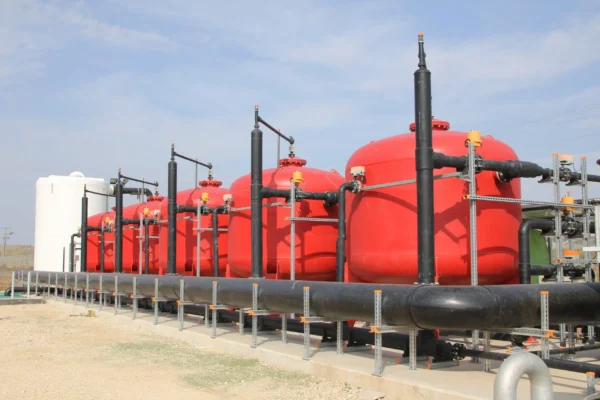
Automatic filters and multimedia filtration systems reduce suspended solids, sediment, and other particulate contaminants before water reaches finer filtration stages.
Multimedia filters use layers of filtration media to capture particles throughout the filter bed. Automatic backwashing removes accumulated solids and restores filter performance. Cyclonic separators can also separate heavier suspended particles through centrifugal action.
Advanced Filtration works with Amiad Water Systems, which supplies automatic backwash filters and cyclonic separators. These technologies can support upstream solids removal in industrial water treatment configurations.
2. Activated Carbon Filtration
Activated carbon filtration uses adsorption to remove certain dissolved organic compounds, chlorine, and other substances from water.
This technology is particularly important when the downstream RO membrane is sensitive to oxidizing agents. Polyamide RO membranes, for example, require protection from residual free chlorine because prolonged exposure can cause membrane degradation.
Pentair Filtration provides sediment and carbon filtration equipment within Advanced Filtration’s manufacturer network. These products can be considered when evaluating particulate reduction and chemical pretreatment requirements.
The appropriate carbon filtration configuration depends on incoming water chemistry, chlorine concentration, flow rate, and contact time.
3. Cartridge and Depth Filtration
Cartridge filters provide another level of particulate removal before water enters sensitive downstream equipment. They capture suspended particles that pass through earlier filtration stages, helping reduce the particulate load reaching RO membranes.
Different cartridge designs offer different filtration characteristics:
- Pleated cartridges: Provide a large filtration surface area and are available in different filtration ratings.
- Depth cartridges: Capture particles throughout the filter structure.
- Wound cartridges: Use layered filter materials to retain particles as water passes through the cartridge.
Advanced Filtration works with several manufacturers in this category.
Graver Technologies supplies pleated and depth filter cartridges for industrial filtration applications.
Matrix Separations provides wound and depth filter cartridges made from materials such as cotton, nylon, and glass fiber.
For specialized filter configurations, Fil-Trek offers industrial cartridge and bag filter housings, while Filtration Systems provides bag filter vessels, cartridge filter vessels, and filter media.
4. Ultrafiltration
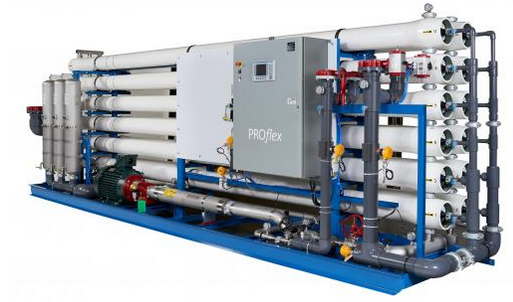
Ultrafiltration (UF) is a membrane-based separation process that removes suspended solids, colloidal particles, and many microorganisms through a membrane barrier.
UF can serve as pretreatment for RO systems, particularly when feedwater contains substantial particulate or microbial loads. Its ability to provide consistent filtration can help reduce the burden placed on downstream RO membranes.
Mar Cor Corporation offers hollow fiber cartridges and RO-related water treatment products, while Veolia Water Technologies & Solutions supplies Hytrex and Z-Plex filters, as well as RO and UF membrane systems.
These product categories provide additional options when evaluating membrane-based filtration and different stages of an industrial water treatment system.
How Pretreatment Performance Is Evaluated
Selecting filtration equipment is only part of the process. Facilities also need to determine whether their pretreatment system produces water suitable for downstream membranes.
Two commonly used indicators are the Silt Density Index (SDI) and Modified Fouling Index (MFI).
Silt Density Index (SDI) measures the tendency of water to cause particulate fouling. It is commonly used to assess RO feedwater quality and determine whether additional filtration may be necessary.
Modified Fouling Index (MFI) provides another measure of particulate fouling potential and accounts for cake filtration behavior.
A 2012 industrial demonstration study by Quevedo and colleagues examined different filtration configurations at a steel factory’s water treatment plant. Researchers found that a dual-stage, in-series filtration arrangement using two pressurized filters achieved SDI values below 5 and MFI values below 1 under optimized operating conditions.
The findings demonstrate how filtration configuration can influence the quality of water entering an RO system. They also highlight why pretreatment performance should be evaluated using appropriate water quality measurements rather than relying on turbidity alone.
What Happens When Pretreatment Is Inadequate?
When pretreatment fails to control incoming contaminants, problems can develop throughout the RO system.
Particulate accumulation may increase pressure drop across membrane elements, while mineral deposits can restrict water flow and reduce membrane performance. Biological growth and organic deposits can create additional cleaning requirements.
These problems can affect several operational indicators:
- Reduced normalized permeate flow.
- Increased differential pressure.
- Higher salt passage.
- More frequent membrane cleaning.
- Increased chemical and replacement costs.
- Unplanned maintenance and production interruptions.
Monitoring these indicators helps operators identify developing problems and determine whether the cause originates in pretreatment, membrane operation, or another part of the treatment system.
How to Choose the Right Industrial Water Pretreatment System
Choosing the right pretreatment configuration begins with understanding the incoming water.
A water quality analysis helps identify contaminants and determine which treatment methods are appropriate. Important parameters may include turbidity, suspended solids, SDI, hardness, alkalinity, pH, iron, manganese, silica, organic content, and residual chlorine.
Facilities should also consider:
- Water source: Surface water, groundwater, seawater, and industrial wastewater have different treatment requirements.
- Flow rate and capacity: Filtration equipment must accommodate the required operating flow without creating excessive pressure loss.
- Membrane specifications: Pretreatment must meet the feedwater requirements established by the membrane manufacturer.
- Operating conditions: Pressure, temperature, recovery rate, and chemical dosing can influence filtration performance.
- Maintenance requirements: Filter replacement intervals, backwashing frequency, and cleaning procedures should be considered during system selection.
Working with filtration specialists can help facilities evaluate these factors and identify equipment suited to their operating conditions.
Frequently Asked Questions
Why does RO water need pretreatment?
RO feedwater needs pretreatment to reduce suspended solids, colloids, organic contaminants, scaling compounds, and other substances that may affect membrane performance. The required treatment depends on the water source and membrane specifications.
What filters are used before reverse osmosis?
Common options include multimedia filters, activated carbon filters, cartridge filters, and ultrafiltration membranes. Water softening and chemical treatment may also be necessary, depending on feedwater chemistry.
Does ultrafiltration replace RO pretreatment?
UF can serve as an RO pretreatment stage by reducing suspended solids, colloids, and many microorganisms. However, it does not remove every dissolved contaminant or eliminate the need for other treatment methods when scaling or chemical risks are present.
How often should industrial pretreatment filters be replaced?
Replacement frequency depends on incoming water quality, filter capacity, operating conditions, and manufacturer recommendations. Monitoring differential pressure and filter performance helps determine when maintenance or replacement is needed.
Improve Your Industrial Water Filtration Performance with Advanced Filtration
Effective pretreatment begins with understanding the water entering your system and selecting filtration technologies that address its specific contaminants. The right combination of filters, housings, media, and membrane technologies can help facilities maintain feedwater quality, protect downstream equipment, and manage operating requirements.
Advanced Filtration Company works with established filtration manufacturers, including Water Systems, Pentair Filtration, Graver Technologies, Fil-Trek, Mar Cor Corporation, Veolia Water Technologies & Solutions, and more, to provide industrial filtration products for a range of applications.
Whether you are evaluating a new pretreatment configuration, replacing existing filters, or looking to improve an underperforming system, Advanced Filtration can help assess your requirements and identify suitable filtration solutions.
Contact Advanced Filtration for expert consultation or explore our manufacturer partners to find filtration products suited to your operation.